

There were many who doubted the wisdom of holding the World Championships in Rwanda, but Jeremy Ford, the speaker for November, gave the club an account which showed there were many benefits.
Feature: The Pedal Club Lunch (November) (by Chris Lovibond) — There were many who doubted the wisdom of holding the World Championships in Rwanda, but Jeremy Ford, the speaker for November, gave the club an account which showed there were many benefits. Jeremy has a long term interest in African cycling and has been involved in the promotion of Team Africa Rising for the past decade. He told the club that the races were well run and that the government had made sure there was adequate financial support.
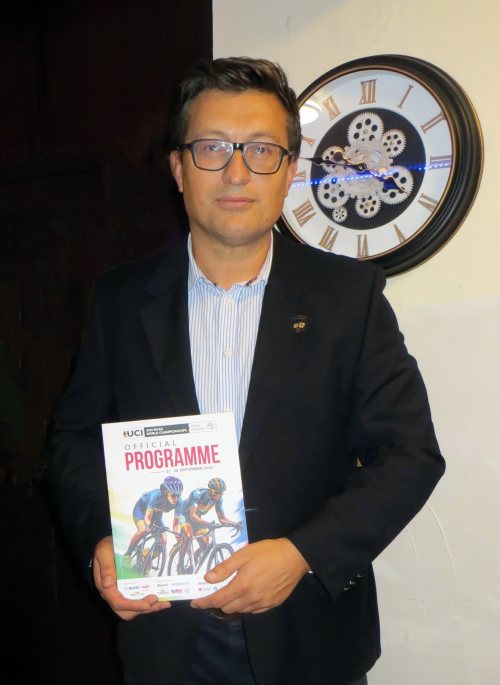
Jeremy Ford
The road race course was certainly tough, hard enough to make the world’s best struggle, and in fact in the elite men’s race there were only thirty finishers from one hundred and sixty four starters. And in the Junior Men’s championship, GB’s Harry Hudson took full advantage of the brutal course to win the rainbow jersey.
Whilst the course difficulties certainly made the racing interesting – it was ‘old fashioned’ in one important respect: most riders turned off their Garmins. This was because the conditions (altitude and heat) made all performance figures abnormal and therefore useless; spectators like riders needing to use their own judgements about how to race.
The main point the speaker made was that these championships should have a significant effect on African cycling generally. The races were covered by the world’s media, which naturally includes Africa and this meant that young people there saw, for the first time, African riders competing at the highest level.
In some parts of the world cycling is just seen as transport for the poor, but Africa is different and bikes are valued. Yes, they are used for work and transport, but there is also a genuine joy about riding, something less and less true in car saturated Europe. Although it must be admitted that football is Africa’s leading sport, cycling is coming up strongly, particularly in the eastern countries and the big world tour teams are now actively looking for African talent (there are already 140 Africans in world tour teams). The sport has come a long way from Tom Richie’s involvement in the 2006 ‘Wooden Bicycle Classic’.
African racing cyclists are now better equipped, although there are still some problems. Naturally, riders want the best modern kit but there can be confusion about what is really best for the conditions. ‘Hi Tech’ can be a bit too advanced for the current situation – for example at this championship some riders wanted to use a 12 speed electric change system but were disappointed to discover that there were only 11 speed chargers (different system) available in the whole continent. It’s necessary to understand that the best kit is what is suitable for local conditions.
As a tiny contribution to this problem, the Pedal Club is giving £500 to Jeremy’s cycling charity.
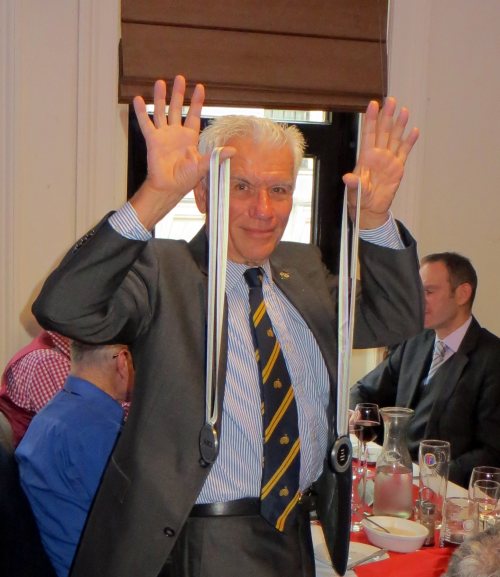
It has been suggested, erroneously, in the past that the Pedal Club membership is too old to do anything significant. In fact the club does have a few young members, but some of the older ones are pretty active. At this meeting, member Malcolm Freeman (above), freshly returned from the UCI world track championships at Roubaix, displayed his two silver medals won at this year’s event. He rode in the 75 plus age group and gained second place in both the points race and the pursuit. Congratulations and thanks to Malcolm for demonstrating that Pedal Club members can compete at world level.
The lunch attracted forty seven members and guests and was held at the Civil Service Club.
Chris Lovibond, November 2025
Send your results as well as club, team & event news here
Other Results on VeloUK (including reports containing results)
- 2026 BMCR EVENTS: Stallard & Championships
- Features, Reports, Results
- RESULT: Manchester Regional Track League
- BRITISH CYCLOCROSS CHAMPIONSHIPS DAY 2
- BRITISH CYCLOCROSS CHAMPIONSHIPS DAY 1
- STARTLIST – DAY 2: BRITISH CYCLOCROSS CHAMPIONSHIPS
- STARTLIST: British Cyclocross Championships 2026 (DAY 1)
- BMCR FEATURE: KARL SMITH Q&A
- CX Result: South West CX League 9
- CX Result: Wessex Cyclocross League 11
- CX Result: Shimano Lazer WMCCL 12
- National Trophy CX Round 6 (Day 2)
- CX Result: National Trophy Round 6 (Day 1)
- CX Result: Nova Cross (New Years Day)
- CX Result: Macclesfield Supacross
- CX Result: Boxing Day Cross (Kenilworth)
- CX Result: Leicestershire CX League Rd 4
- CX Result: Yorkshire CX League 8
- National Track Series: Day 2
- CX Result: NWCCA Christmas ‘Cross
- National Track Series/Championships
- National Series Calendars (Youth/Junior/U23/BMX)
- NEWS: INEOS Grenadiers Racing Academy
- Ribble Custom Colours for Clubs
- News: Jacob Bush Extends Contract
- CX Result: London/SE CX League 8
- CX Results: NWCCA Rd 6
- CX Result: Lincolnshire CX Rd 9
- CX Result: Western CX League Rd 9
- CX Result: CXNE League Round 8
- CX Result: Wessex CX League Rd 10
- CX Result: Eastern Regional CX League 9
- CX Result: Yorkshire CX League #7
- BMCR Feature: Rob O’Connor Q&A
- CX Result: Notts and Derby League Rd 6
- CX Result: Central CX League #9
- CX Result: Shimano Lazer WMCCL Rd 11
- CX Result: Inter Regional Short Track Cyclocross
- National Trophy Round 5 | Day 2
- CX Results: Eastern Region CX League Round 8
- CX Result: National Trophy Cyclocross Round 5
- CX Result: SWCX Round 7
Other News on VeloUK
- STARTLIST – DAY 2: BRITISH CYCLOCROSS CHAMPIONSHIPS
- STARTLIST: British Cyclocross Championships 2026 (DAY 1)
- National Track Series/Championships
- National Series Calendars (Youth/Junior/U23/BMX)
- NEWS: INEOS Grenadiers Racing Academy
- Ribble Custom Colours for Clubs
- News: Jacob Bush Extends Contract
- News: British Cycling Competition Framework
- Team News: New role for Geraint Thomas as Director of Racing
- Feature: The Pedal Club Lunch (November)
- 2026 BMCR EVENTS: Stallard & Championships
- Q&A: James Calvert
- BMCR Feature: Masters Spotlight: Michael Bell
- News: National Series calendars announced for 2026 season
- This Weekend: National Trophy Round 3 (Clanfield)
- Rider Feature: Riley Tonner
- Track Worlds Day 5: GB Report
- Track Worlds Day 4 – GB Team Report
- Track Worlds Day 3 – GB Report
- Track Worlds Day 2 – GB Report
- EVENTS: 2025 HILL CLIMB CHAMPIONSHIPS
- Cavendish Speaks at Pedal Club Dinner
- News: GB for Track Worlds
- Sad News: Max Pendleton Passes Away
- NEWS: CLIMBING TRAINING CAMP
- Tour of Britain 2026 News
- Startlist: National Trophy Round 1 (Derby)
- News: Indoor Champs Coming to Derby
- Report: Harry Hudson wins World Title!
- BMCR National Circuit Championships
- Feature: Eddie Dunbar – Building towards the Tour de France & beyond
- FEATURE: The Pedal Club September Lunch
- News: GB for Road Worlds (Rwanda)
- BMCR Event: National Championship
- Report: Men’s Tour of Britain Stage 5
- New Team for Cyclocross Champion Xan Crees
- Tour of Britain Stage 1
- Men’s Tour of Britain Provisional Start List
- Tour of Britain News: GB Team for Race
- FEATURE: The Pedal Club Lunch (August)